K-Electric Bill November 2026: The Proposed Rs2.56/Unit FCA, Explained
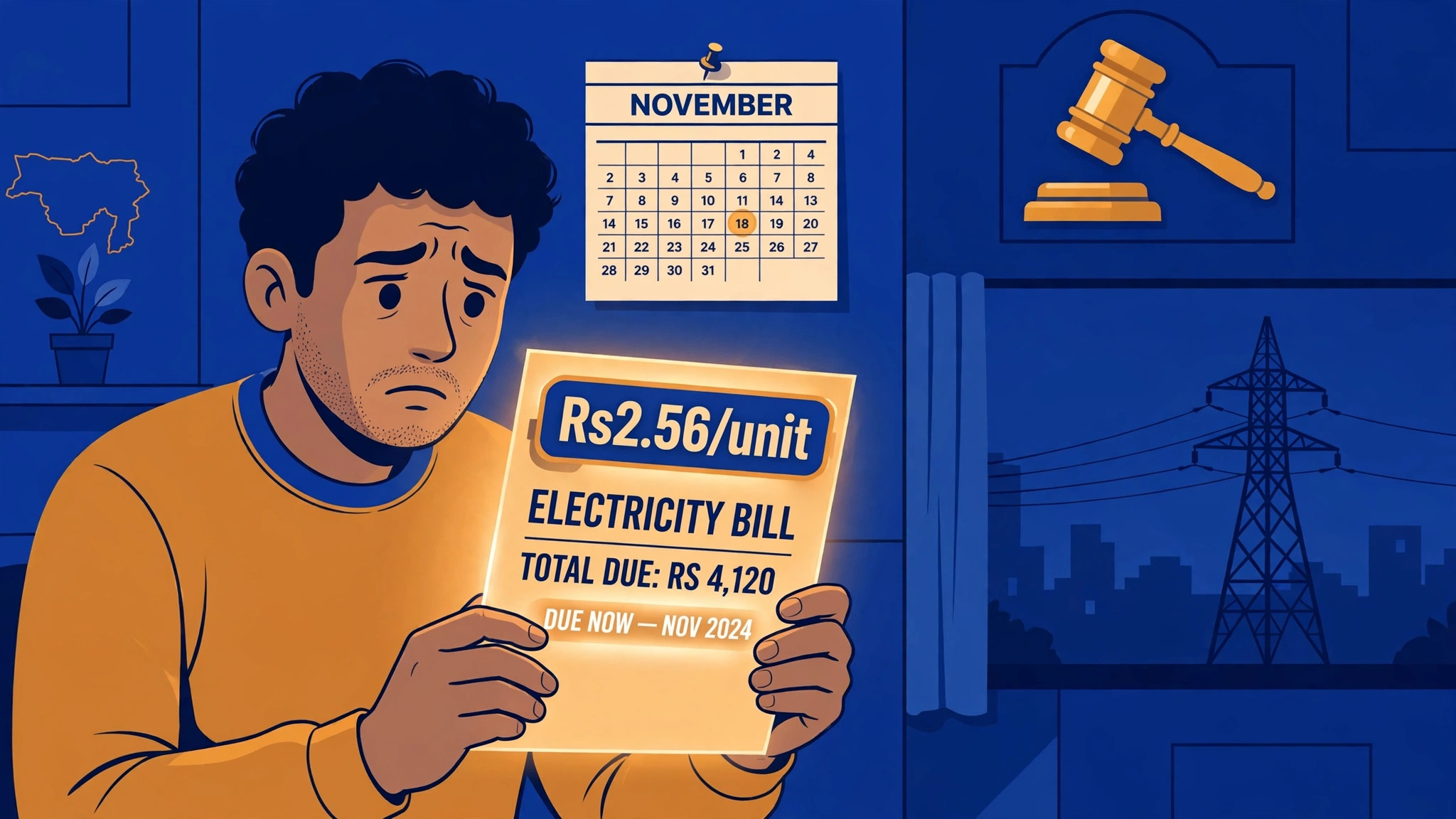
k-electric bill november 2026 could be another painful one for Karachi households — and this time the number doing the damage is Rs2.5624 per unit. Pakistan’s power purchaser has asked the regulator to approve a fuel cost adjustment for September 2026 that would be collected through November’s bills. Here is the part most headlines bury: nothing is approved yet. NEPRA holds a public hearing on October 29, and only after that do we know what — if anything — actually lands on your bill.
Quick answer: K-Electric bills for November 2026 may include a fuel cost adjustment (FCA) of Rs2.5624 per unit for electricity consumed in September 2026. The Central Power Purchasing Agency (CPPA-G) has requested this from NEPRA; a public hearing is scheduled for October 29, 2026. The charge is proposed, not yet approved, and under the uniform FCA policy it would apply to K-Electric consumers too.
What Exactly Has Been Proposed
On behalf of the ex-Wapda distribution companies, CPPA-G filed a request with the National Electric Power Regulatory Authority asking for a September 2026 fuel charges adjustment of Rs2.5624 per unit. If NEPRA approves it after the hearing, the amount gets recovered in November 2026 bills — one month’s billing cycle for one month’s fuel-cost gap.
Two things matter here. First, this is a request, not a notification. The August FCA (Rs1.11/unit, already showing in October bills) went through the same process — request, hearing, then NEPRA’s decision. Second, under the government’s uniform FCA policy, whatever NEPRA decides applies to K-Electric consumers in Karachi as well, not just the Wapda-linked discos. Karachi is not exempt from this one.
Who Would Pay It
If approved as requested, the adjustment would apply to K-Electric’s consumers alongside all ex-Wapda disco consumers — residential, commercial and industrial. The exact exemptions will only be confirmed in NEPRA’s final notification, but recent FCA decisions have consistently spared the same groups: lifeline consumers (the smallest domestic users), electric-vehicle charging stations, and consumers on prepaid tariffs. If you are in one of those categories, there is a good chance you sit this one out — wait for the official notification to be sure.
For everyone else, the charge scales with consumption. It is charged per unit, so the bigger your September meter reading, the bigger the line item.
The Math: What Rs2.56/Unit Actually Means for You
This is the part that matters at the kitchen table. The adjustment is billed on your September consumption, and it stacks on top of everything else — base tariff, the October FCA of Rs1.11 (billed separately), quarterly adjustments, taxes and the TV fee. Here is what the proposed Rs2.5624 per unit adds up to:
| September units | Extra on your November bill |
|---|---|
| 100 units | Rs256 |
| 200 units | Rs512 |
| 300 units | Rs769 |
| 500 units | Rs1,281 |
| 700 units | Rs1,794 |
A household that used 300 units in September would pay roughly Rs769 more — and that is in addition to the Rs1.11/unit August FCA already in October’s bill. Across the country, the Power Division estimates the September FCA would move about Rs32.7 billion from consumers’ pockets to the fuel-cost gap. That is Rs1.45 per unit more than the August adjustment.
Want to estimate your full bill including all these adjustments? Our KE bill calculator on the Tariff Rates page walks through slabs, FCA, quarterly adjustments and taxes so you can see the real number before the bill arrives.
Why September Cost So Much: Rs10.02 vs Rs7.46
The FCA exists for one reason: fuel prices moved after the reference tariff was set. For September, NEPRA’s reference fuel charge was Rs7.4596 per unit. The actual cost of power delivered to the distribution system came in at Rs10.022 per unit. The Rs2.5624 gap is simply that difference, passed through to consumers — the FCA mechanism, for better or worse, is designed to do exactly this every month.
What drove September’s cost up? CPPA-G’s filing breaks it down: imported coal alone cost Rs37.14 billion, imported LNG Rs31.93 billion, local gas Rs13.89 billion, diesel Rs13.26 billion, furnace oil Rs11.81 billion and local coal Rs7.95 billion — a total September fuel bill of Rs127.87 billion across 12.76 billion units sold. Global crude surged past $120 a barrel against the roughly $70 assumption baked into the reference tariff, which made furnace-oil and diesel generation brutally expensive.
There is one piece of good news buried in the Power Division’s briefing: targeted load management of two to two-and-a-half hours during September avoided running the most expensive plants around the clock, which the division says prevented up to Rs3.44 per unit of additional burden. Without it, this request could have been Rs5–6 per unit. Small comfort, but comfort.
The Timeline: What Happens Between Now and Your November Bill
Here is the sequence, with dates:
- Mid-October 2026 — CPPA-G files the September FCA request (Rs2.5624/unit).
- October 29, 2026 — NEPRA’s scheduled public hearing. This is where the request gets scrutinised; NEPRA has trimmed CPPA-G’s numbers before (it cut the August request from Rs1.73 to Rs1.11).
- Early November 2026 — NEPRA issues its decision/notification, which fixes the final per-unit figure and the exemption list.
- November 2026 billing — the approved amount appears as a separate FCA line on your bill, based on September units consumed.
The honest read: the final number is rarely the requested number. NEPRA’s track record is to verify CPPA-G’s fuel data and shave it down. Treat Rs2.56 as the ceiling being asked for, not the figure you will necessarily pay.
How This Differs From October’s Rs1.11
Do not mix the two up — they are separate months, separate bills:
- October 2026 bills carry the August FCA: Rs1.11/unit (Rs1.1086 to be exact), already notified by NEPRA.
- November 2026 bills would carry the September FCA: Rs2.5624/unit, currently only proposed.
Both flow from the same monthly mechanism. Our Tariff Rates page explains how FCA, quarterly tariff adjustments and slab rates fit together if you want the full picture of what you are actually paying per unit.
How to Check Your November Bill When It Arrives
When November bills drop, do not just glance at the total — check the FCA line and the billing month it references. Your fastest routes, all official:
- KE website — enter your 13-digit account number on KE’s duplicate-bill page and view or download the PDF. Full walkthrough on our homepage guide.
- KE Live app — the Power tab shows your bill plus your feeder’s outage schedule.
- SMS — KE’s 8119 service and helpline 118 can confirm your bill status.
And if the bill never reaches your doorstep, our load-shedding schedule guide covers the same official channels (they overlap — KE’s app and helpline handle both).
What You Can Actually Do Right Now
You cannot change September’s fuel prices, but you are not helpless either:
- Watch the October 29 hearing outcome. The final figure — and who is exempt — comes from NEPRA’s notification, not the request. This article will be updated the day the decision lands.
- Know your September units. The FCA is per-unit, so your September meter reading decides your exposure. It is on your October bill.
- Estimate, don’t guess. Run your numbers through the calculator on our Tariff Rates page with the proposed Rs2.56 added, so November holds no surprises.
- Cut October consumption if you can. November’s FCA is about September, but every unit you save now trims the base-tariff portion of future bills — and peak-hour discipline still matters for the overall total.
FAQs
Is the Rs2.56/unit increase confirmed for November 2026 bills?
No. CPPA-G has requested Rs2.5624/unit from NEPRA for September 2026’s FCA. NEPRA’s public hearing is on October 29, 2026, and the final figure — which has historically come in lower than requested — will be set in the official notification.
Does this apply to K-Electric consumers in Karachi?
Yes, if approved. Under the uniform FCA policy, NEPRA’s fuel cost adjustments apply to K-Electric consumers alongside ex-Wapda disco consumers.
Which month’s electricity does the November FCA cover?
September 2026. The FCA always lags: August’s FCA (Rs1.11) is in October bills; September’s FCA (proposed Rs2.56) would be in November bills.
Who is exempt from the FCA?
The exemption list comes with NEPRA’s final notification. In recent months, lifeline consumers, EV charging stations and prepaid-tariff consumers were exempt — the same pattern is likely, but wait for the official word.
How much extra would a 300-unit household pay?
At the requested Rs2.5624/unit, about Rs769 — on top of the Rs1.11/unit August FCA already in October’s bill.
Where will the FCA appear on my bill?
As a separate “Fuel Charges Adjustment” line item, calculated on your September units. Check it against the billing month printed on the bill.
KElectricBill.pk is an independent, unofficial guide — we are not affiliated with K-Electric or NEPRA. Figures above come from CPPA-G’s public filing and news reporting; always confirm the final per-unit rate in NEPRA’s official notification. See our disclaimer.